Graphic design that stays on-brand, every single time.
The applied, day-to-day design work that turns your brand identity into real deliverables like decks, social, packaging, ads and collateral without the consistency falling apart.
Service summary at a glance
What's included
- Marketing & sales decks - investor, pitch and board presentations
- Social media templates & campaign creative
- Packaging and label design - print-ready
- Digital ad sets - static and motion-ready
- Brochures, one-pagers and sales collateral
- Event and trade-show graphics
- Email and newsletter templates
- Editable source files in Figma and Adobe
Best for
- Funded D2C and SaaS brands with a live brand identity
- Founders drowning in one-off design requests
- Marketing teams without an in-house designer
- Anyone whose decks, ads and social don't look related
Outcomes you can expect
- Every asset visibly on-brand, on every channel
- Faster turnarounds than a full-service agency
- One designer who already knows your system
- A growing library of reusable templates
01What graphic design services actually cover
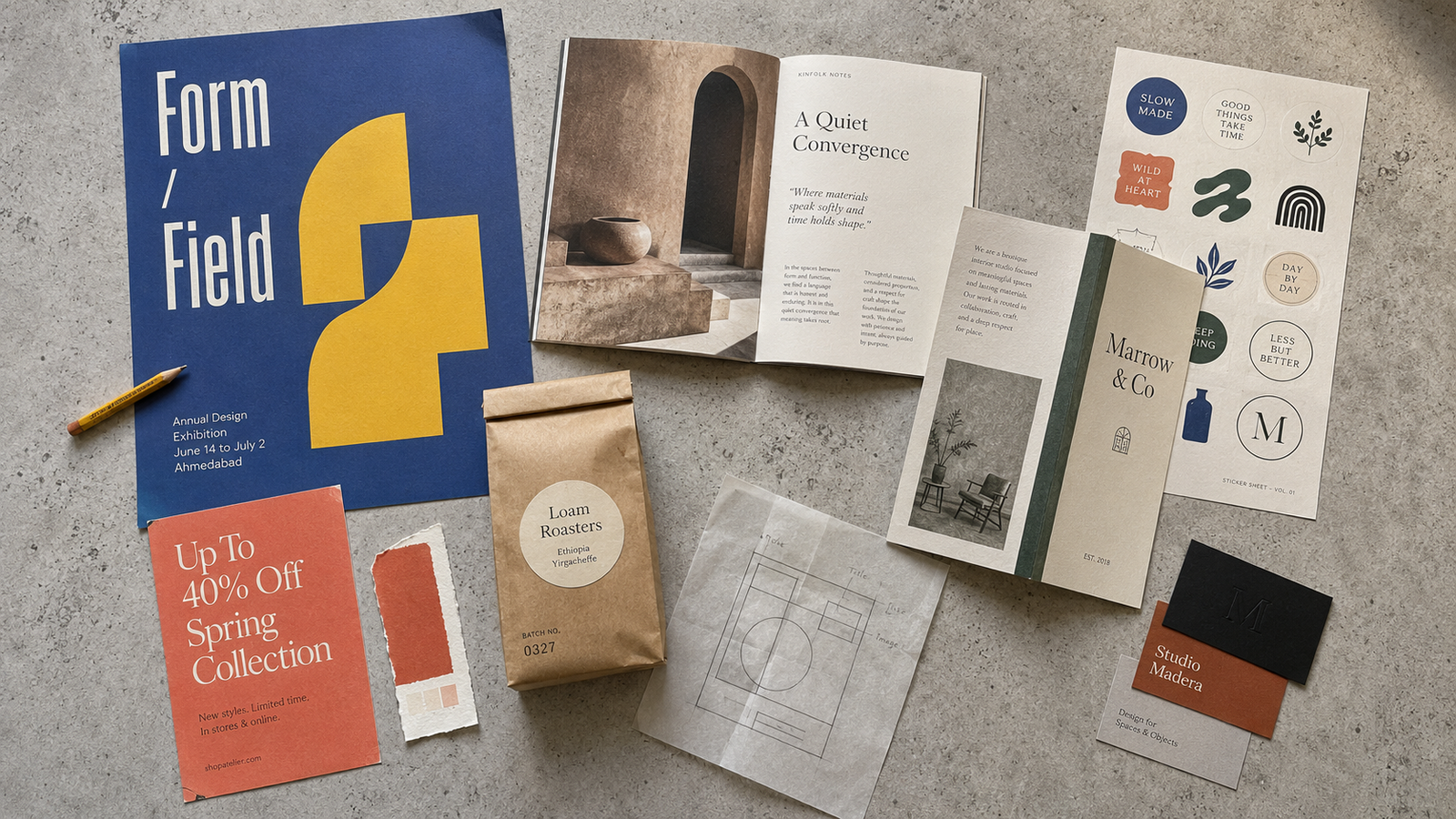
Graphic design services are the applied, ongoing design work a business needs after the brand identity exists - the decks, social posts, packaging, ads and collateral that put the brand in front of real customers. Brand identity sets the rules. Graphic design services are where those rules get used, week after week.
Graphic design vs brand identity where the line sits
Most founders blur these two together, and it costs them. Brand identity design is a one-time foundational project — the logo system, typography, colour, voice and the guidelines that hold it together. You can read the full breakdown on the brand identity design service page.
Graphic design services are what happen next, and they never really stop. Every month your business needs a new pitch deck, a campaign for a launch, packaging for a new SKU, a set of ads, a trade-show banner. That is production design — applied, repeatable, deadline-driven work.
The problem is what happens when it gets scattered. A freelancer for the deck, a Fiverr gig for the social posts, your intern for the one-pager — and within a quarter nothing matches. The logo is fine. Everything built around it has drifted. Good graphic design services exist to stop exactly that drift.
Here the two are joined up on purpose. The same designer who can build your identity also runs the applied work — so the system is actually followed, not just filed away in a PDF nobody opens.
02What you get with ongoing graphic design services
A graphic design services engagement is built around your real marketing calendar, not a fixed deliverable list. In a typical month that means:
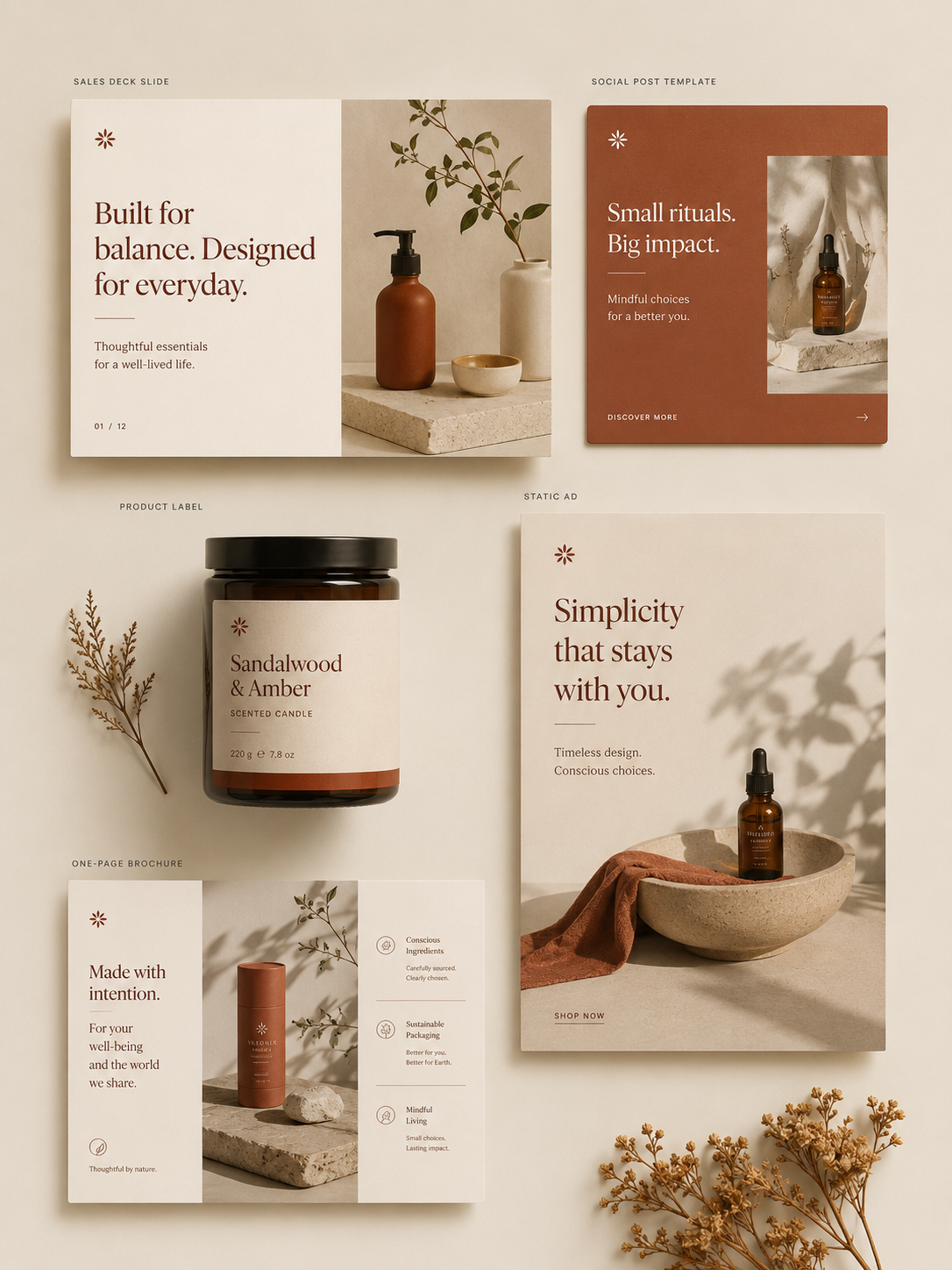
Sales and investor decks. Pitch decks, sales decks, board updates — laid out so the story lands and every slide looks like it belongs to the same company.
Social and campaign creative. Templated post sets, launch campaigns and motion-ready frames your team can reuse without breaking the layout.
Packaging and print. Labels, boxes, inserts — print-ready files with the bleed, dielines and colour profiles a printer won’t bounce back.
Ads and collateral. Static ad sets, one-pagers, brochures, event graphics, email templates — the unglamorous stuff that quietly carries your brand everywhere.
Everything ships with editable source files, so you are never locked out of your own assets. And because it is one designer who already knows your system, you skip the two-week onboarding tax every new freelancer charges you in slow, slightly-wrong first drafts.
Consistency is the whole point
There is a reason consistency keeps coming up. When your brand looks the same everywhere, people recognise it faster, trust it sooner and remember it longer. When it doesn’t, every asset quietly works a little against you.
This is also a core usability principle — consistency and standards is one of the ten classic design heuristics for a reason. Predictable design lowers the effort it takes someone to understand you.
Graphic design services run by one designer make consistency the default instead of the exception. No handoff gap, no “which version of the logo is current” Slack thread, no reconciling four freelancers’ interpretations of your brand.
03How the graphic design process works
Graphic design services only work if the process is predictable. Here is how a request moves from brief to final file.
Step 1 — Brief and queue. You drop a request with the goal, the deadline and any copy or reference. It goes into a shared, visible queue — you always know what is in progress and what is next. No black box.
Step 2 — First draft. Because the brand system is already loaded, the first draft is genuinely close — not a generic template waiting to be corrected. Most single-asset requests get a first draft within two to four working days.
Step 3 — Focused revisions. Two structured rounds of revision per asset. Structured, not open-ended — feedback is consolidated so the work converges instead of drifting sideways forever.
Step 4 — Handover. Final exports in every format you need, plus the editable source file, dropped straight into your shared drive. If it is a template, you also get a short note on how to reuse it without breaking it.
On a retainer, several requests run in parallel against an agreed monthly capacity. On a project sprint, a defined scope — a deck, a packaging set, a campaign — is booked, designed and delivered in one focused block.
04Who graphic design services are for and who they're not
Honesty about fit saves everyone a wasted month.
It’s a strong fit if you’re:
- A funded D2C or SaaS brand with a brand identity already in place, now generating constant design requests
- A founder personally stuck making decks and social posts at 11pm because there is no one else
- A marketing team without an in-house designer, tired of briefing a new freelancer every time
- A business whose decks, ads, packaging and social clearly don’t look like the same company made them
It’s not the right fit if you:
- Don’t have a brand identity yet — start with brand identity design first, or there is no system for the graphic design services to apply
- Need a single one-off asset with no follow-on work — that is a quick project sprint, not an engagement
- Want unlimited output for a flat fee — that model produces volume, not quality, and this is not that
If you are not sure which side you fall on, that is a five-minute conversation, not a commitment.
05Why one designer beats a rotating team
The agency model spreads your work across whoever is free that week. It feels like scale. In practice it means you re-explain your brand every single time, and you pay for that re-explaining in slow, slightly-off first drafts.
Graphic design services delivered by one designer work the opposite way. The person designing your deck this month is the person who designed your packaging last month and your campaign before that. Context compounds. The work gets faster and more accurate over time, not more diluted.
You also get one point of contact, one quality bar, and one person who will tell you honestly when a request is a bad idea — instead of an account manager who passes your brief down a chain and reads the result back to you.
It is the same principle behind every project here: the craft should not die at handoff. You can read more about how this studio is set up and why it is deliberately one designer, end to end.
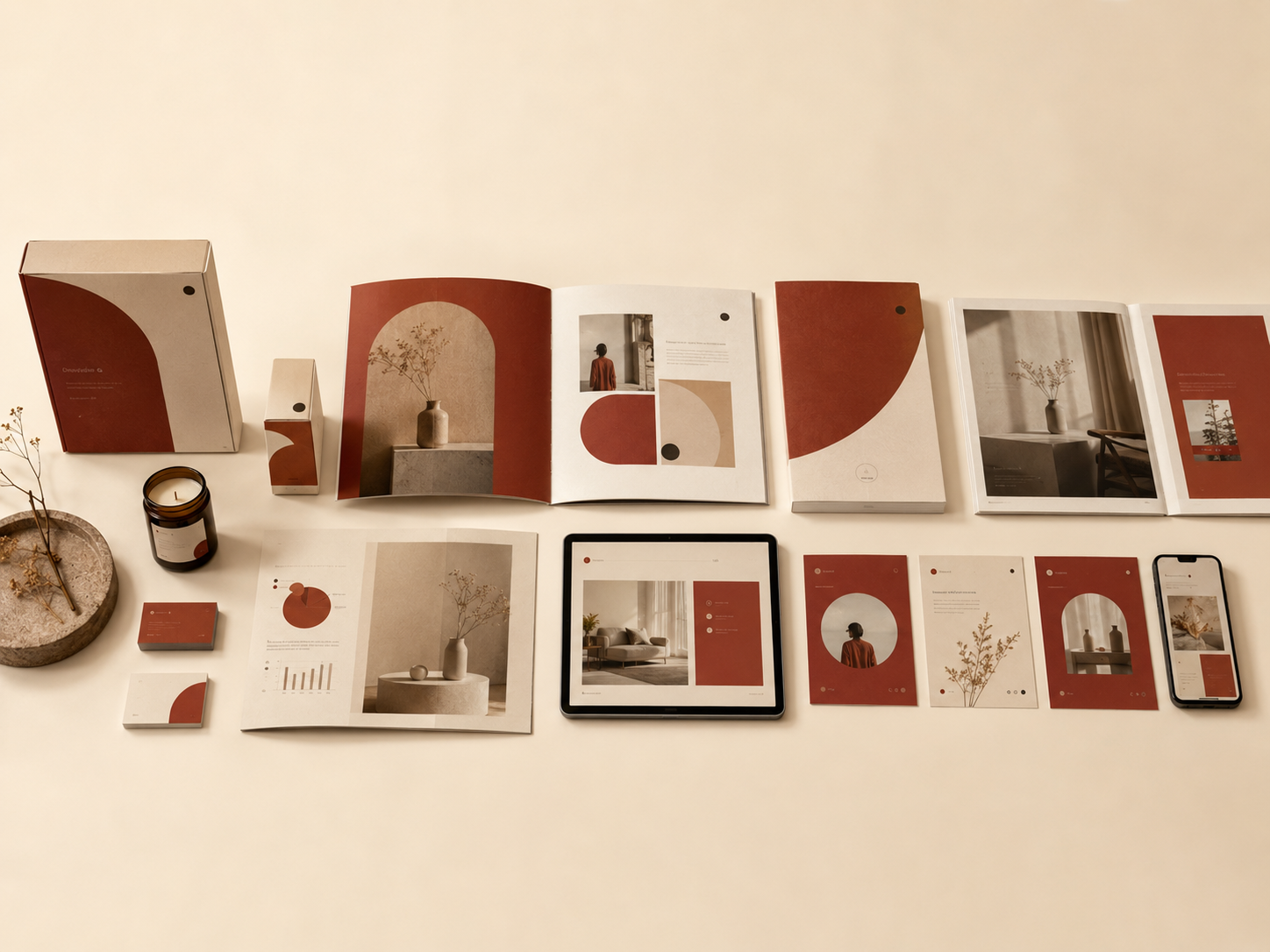
Brand identity is the promise. Graphic design services are whether you keep it every deck, every post, every box, every week.
06What graphic design services cost
Straight answer, because vague pricing wastes everyone’s time.
Monthly retainer — from $2,400/mo. A set design capacity each month, several requests running in parallel, priced in USD, GBP, AED or EUR. Best if you have a steady flow of decks, social, ads and collateral. Most growing brands sit here.
Project sprint — from $700. A defined one-off scope — a pitch deck, a packaging set, a campaign — booked, designed and delivered in a single focused block. Best for a specific deadline rather than ongoing flow.
What changes the number: how much runs in parallel, how much is print and packaging versus digital, and how much net-new design versus templating existing assets. What does not change: you get the editable source files, a fixed number of revision rounds, and one designer rather than a rotating cast.
For how brand and design budgets fit together overall, the 2026 brand identity cost guide breaks down the full picture.
07Files, tools and handover
Every engagement is built in Figma and the Adobe suite, so the source files are standard, openable and not locked to one person.
On handover you get final exports in every format the asset needs print-ready PDFs with bleed and dielines, web-optimised PNGs and SVGs, motion-ready frames where relevant — plus the editable source file itself. Templates ship with a short reuse note so your team can run with them without quietly breaking the layout.
Nothing is held hostage. If the engagement ends, you keep every file, every template and every export. Graphic design services should make your brand more independent over time, not more dependent on one vendor.
08Frequently asked questions
What's the difference between graphic design services and brand identity design?
Brand identity design is the one-time foundation — logo system, typography, colour, voice and guidelines. Graphic design services are the ongoing applied work that uses that foundation: decks, social, packaging, ads and collateral. You build the identity once; you use it every week.
How fast is the turnaround?
Most single-asset requests get a first draft within two to four working days. Larger scopes — a full pitch deck, a packaging set, a multi-format campaign — are scheduled as a sprint with a delivery date agreed upfront. On a retainer, requests run in parallel against a monthly capacity.
Do you work on a retainer or per project?
Both. A monthly retainer suits a steady flow of design requests and starts from $2,400/mo. A project sprint suits a defined one-off scope and starts from $700. If you are not sure which fits, a short call sorts it out.
What if I don't have a brand identity yet?
Then graphic design services have no system to apply, and the work will drift no matter how good each asset is. Start with brand identity design first that builds the logo, type, colour and rules and the applied design work becomes consistent by default.
What files and formats do I get?
Editable source files in Figma and Adobe, plus final exports in every format the asset needs print-ready PDFs with bleed and dielines, web PNGs and SVGs, and motion-ready frames where relevant. Everything lands in your shared drive, and you keep all of it.
How many revisions are included?
Two structured revision rounds per asset. Structured means feedback is consolidated and the work converges — it is not open-ended, which is what keeps timelines and quality predictable for both sides.